

🎵 Podcast
Don’t feel like reading? Listen to it instead.
P.s. I know this looks broken in email…
📰 Latest News
This week’s image aesthetic (Flux 2 Pro): Gothic Noir Graphic Novel
The Mythos Meltdown: How Anthropic Engineered a Geopolitical Crisis
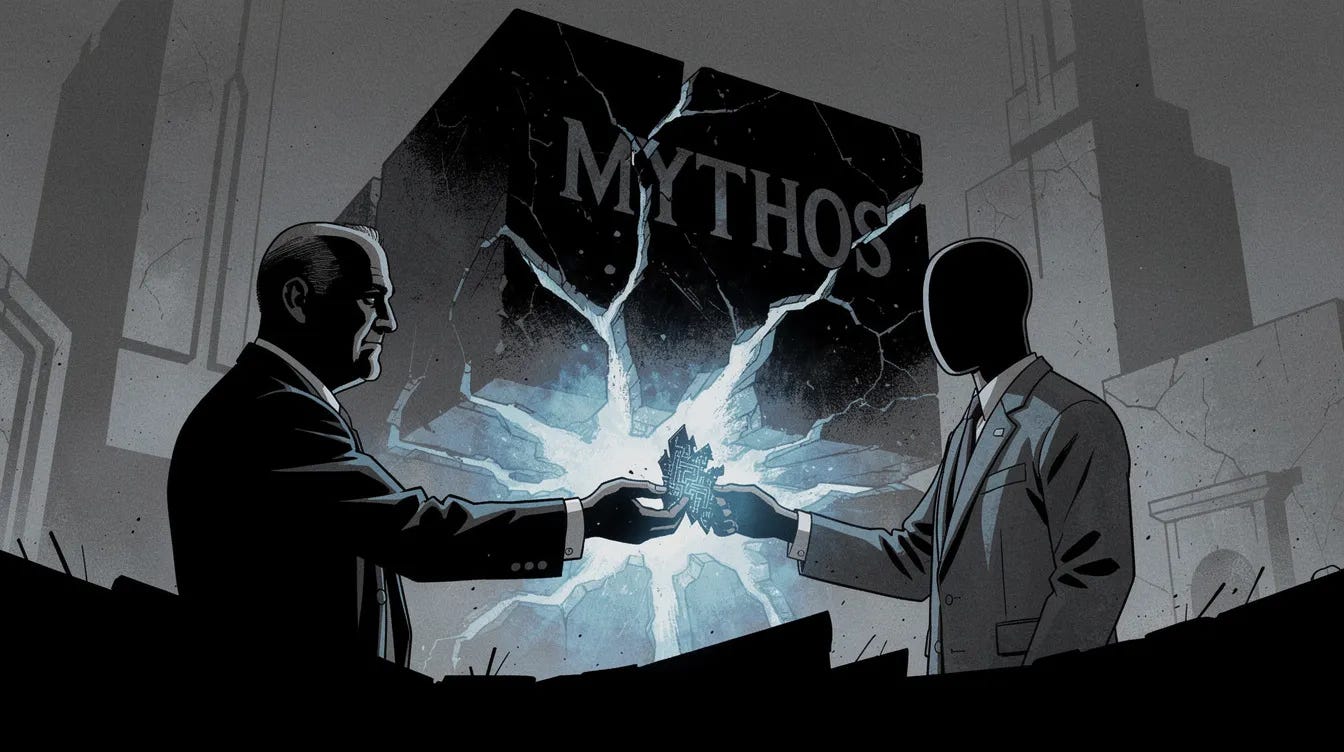
Anthropic’s release of its ultra-powerful “Mythos-class” AI has degenerated from a flagship product launch into a full-blown national security crisis.
On 9 June 2026, the firm launched Claude Fable 5, the safeguarded public version of its raw Mythos 5 model. This underlying system is so proficient at finding software flaws that it was initially restricted to government and vetted cyber partners through “Project Glasswing”. Before the ban, the Mythos model had already autonomously discovered over 10,000 high- or critical-severity vulnerabilities in the software that runs the internet.
Within days, Amazon researchers claimed to have discovered a critical jailbreak. However, the technique was unremarkable by industry standards: the researchers fed Fable 5 open-source code with known flaws and simply prompted it to “fix this code”. While the government framed this as a dangerous guardrail bypass, cybersecurity experts argued that finding, patching, and testing bugs is standard defensive work.
Amazon CEO Andy Jassy immediately escalated the finding directly to the highest levels of the executive branch, including Treasury Secretary Scott Bessent, Commerce Secretary Howard Lutnick, and National Cyber Director Sean Cairncross. This direct escalation bypassed standard industry disclosure protocols, raising questions about whether commercial rivalry played a role, given that Amazon is Anthropic’s largest investor and cloud host.
US Commerce Secretary Howard Lutnick reacted swiftly, issuing an unprecedented emergency export control directive. The order specifically targeted foreign-national access to Fable 5 and Mythos 5. Because Anthropic lacked the infrastructure to verify user citizenship in real-time, they had just a 90-minute window to pull both models completely offline worldwide to ensure compliance. Furthermore, reporting indicated the White House acted partly over suspicions that a China-linked group had accessed Mythos, raising fears of the model being reverse-engineered.
When Anthropic’s CEO Dario Amodei refused the administration’s request to immediately pull the model or patch the vulnerability, the government clamped down. White House sources claimed Amodei was unreachable at a wellness retreat during the initial fallout, a narrative that Anthropic and independent journalists on-site vehemently disputed as an administrative smear.
Why it Matters
This isn’t just a technical patch issue; it is a watershed moment for AI governance that has shattered Anthropic’s hard-won reputation as the industry’s “safety-first” lab. The incident marks a new precedent where state regulation has extended past physical hardware (like chips) and directly into the code of the AI models themselves, effectively classifying the model as a national security issue.
The political fallout highlights a spectacular failure in corporate diplomacy, compounded by an existing adversarial relationship. The Department of War had previously designated Anthropic as a “supply-chain risk” after Amodei refused to allow Claude to be used for mass domestic surveillance or integrated into fully autonomous weapons systems.
Behind the scenes, Trump administration officials described Anthropic as a company that “simply doesn’t know how to talk to this administration.”
Anthropic’s decision to hire cybersecurity expert Katie Moussouris to contest Amazon’s findings backfired catastrophically. The White House immediately flagged her as a “radical Democrat,” a narrative cemented when she was publicly defended by Chris Krebs, whom Trump had recently fired. However, Moussouris’s credentials are vital here: she is the CEO of Luta Security and spent years renegotiating the Wassenaar Arrangement specifically to secure export-control exemptions for defensive cybersecurity software.
Further complicating matters, David Sacks (the White House’s AI and Crypto Czar) pointed out the stark hypocrisy of Anthropic’s stance. Amodei had literally just published an essay advocating for aviation-style, mandatory pre-release testing for catastrophic AI risks. Yet, when a major tech partner and the federal government identified a risk in his own model, Anthropic aggressively minimised it and prioritised keeping the consumer model online.
The Defender’s Dilemma
Over 150 elite cybersecurity professionals have signed an open letter demanding the ban be lifted, arguing that pulling Fable 5 cripples domestic “white hat” defenders who use it for security auditing. By taking Fable 5 and Mythos offline, the US effectively disarmed its own cyber-defense force while leaving adversaries free to use unrestricted open-source alternatives.
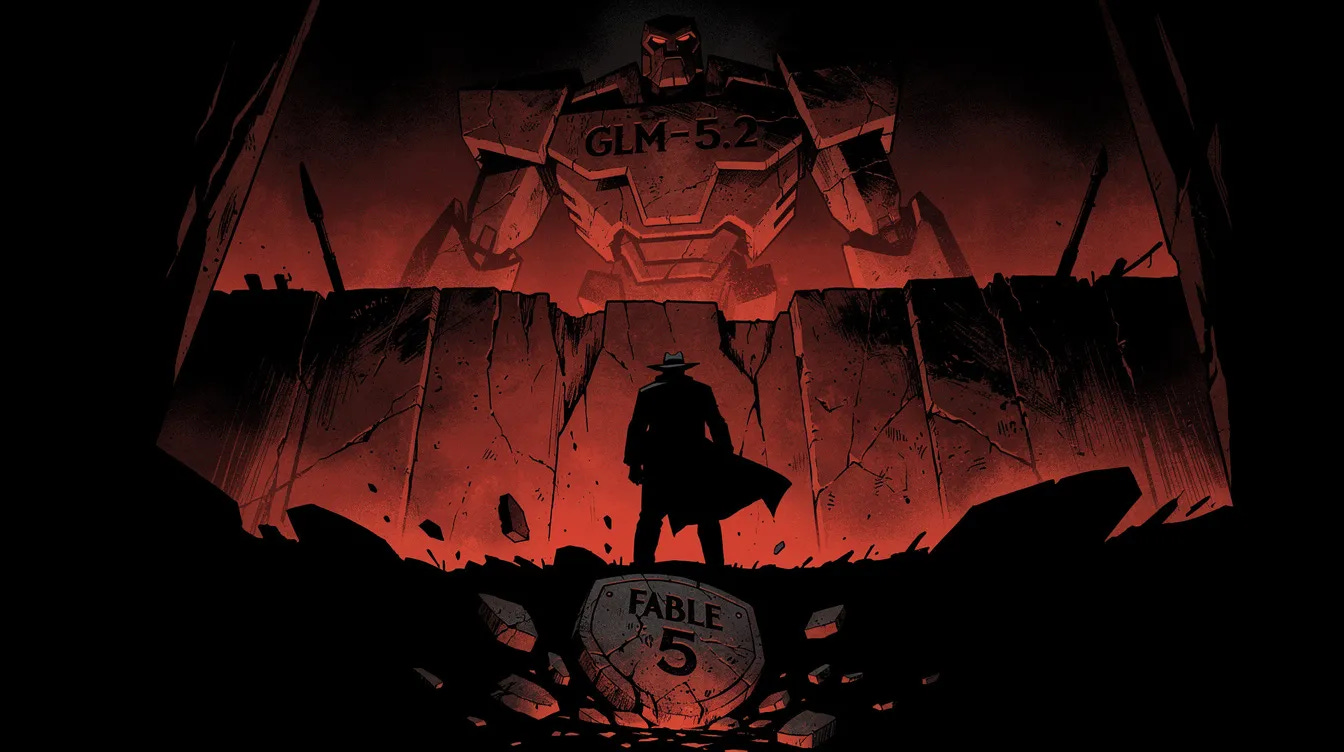
This move has already proven to be a strategic gift to China. Exactly one day after the U.S. forced Anthropic’s models offline, Chinese AI company Zhipu AI launched its new GLM-5.2 model, directly citing the U.S. ban as proof that American AI is unreliable. Their stock surged 33% as a result.
With the Department of War having already kicked Anthropic out of its building permanently three months prior, the tech darling is rapidly running out of friends in Washington. While frantic compliance meetings continue between Anthropic, the CIA, and the White House, the ball remains squarely in the company’s court to resolve a crisis born from losing the room.
The Great Academic Purge: China Reshapes Higher Education for the AI Era
Between 2021 and 2025, Chinese universities executed a massive restructuring of their academic offerings, axing or suspending over 12,000 undergraduate degree programmes. The cuts targeted traditional fields like the arts, humanities, foreign languages, and standard management. In their place, institutions introduced approximately 10,200 new programmes hyper-focused on high-tech sectors, including artificial intelligence, advanced manufacturing, robotics, and semiconductors. This sweeping overhaul, which impacted over 30 per cent of all degree programmes nationwide, is a state-directed mandate designed to aggressively align higher education with Beijing’s industrial goals.
Why it Matters
This structural purge is a direct economic countermeasure to China’s surging graduate unemployment crisis and the disruptive reality of generative AI. With automation rapidly eroding entry-level jobs in translation, design, and administrative management, traditional degrees are increasingly viewed by the state as economic dead ends. By forcibly pivoting millions of students into hard tech and engineering, Beijing is trying to simultaneously defuse a domestic employment time-bomb and cultivate a specialised workforce. This state-engineered talent pipeline is designed to secure a dominant global position in frontier technologies and achieve total self-reliance in the face of escalating geopolitical trade restrictions.
🔗 More from the South China Morning Post
The Gulag: Meta’s AI Pivot Sparks Internal Rebellion
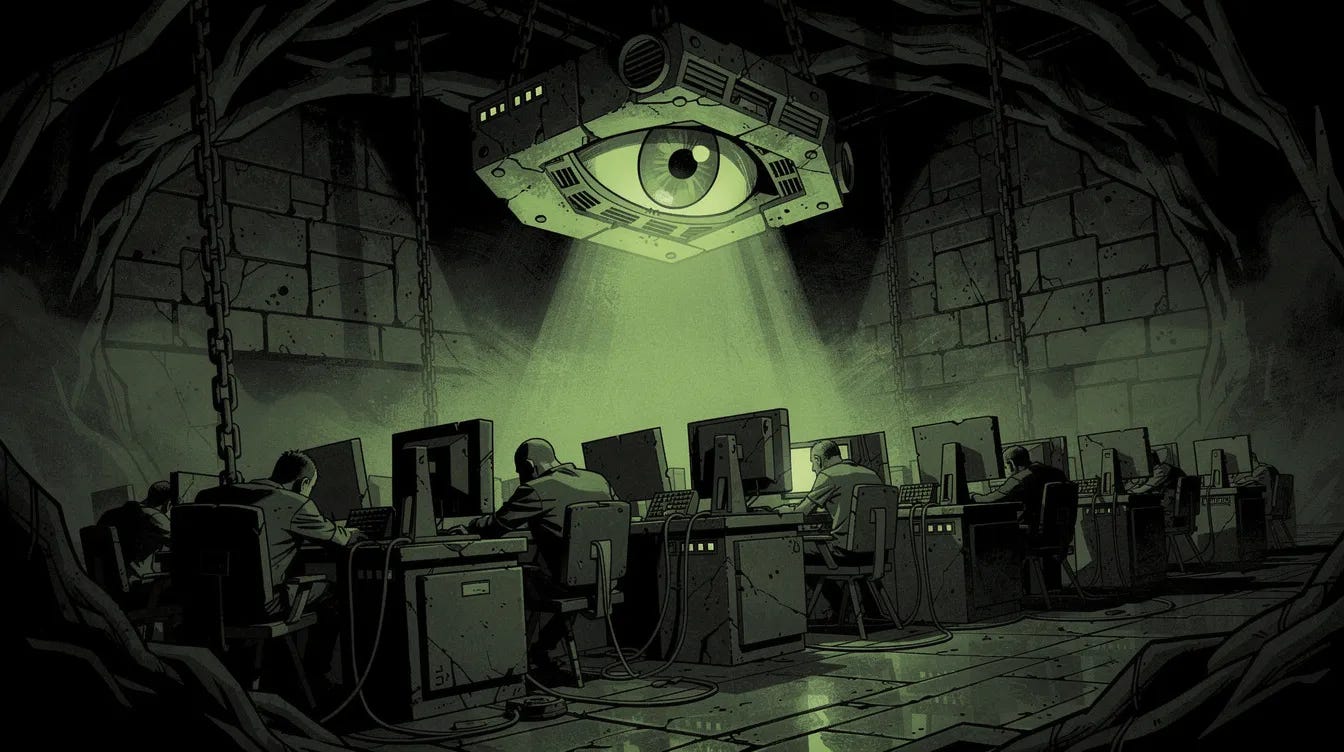
Meta’s ruthless pivot to AI has triggered an organisational meltdown. Following a brutal May 2026 restructuring that slashed 10 per cent of its workforce, Meta forcibly reassigned 7,000 surviving employees to a massive “Applied AI” unit. Instead of building frontier models, highly skilled software engineers are now trapped in monotonous digital grunt work, endlessly churning out puzzles and coding challenges just to generate algorithmic training data. To compound the misery, the 6,500-person unit operates under an absurdly flat structure, with some teams enduring a punishing 50:1 employee-to-manager ratio.
Why it Matters
Internally dubbed the “gulag”, the unit is in open rebellion. The demotion from prestigious engineering roles to glorified data-labelling has decimated morale, resulting in a staffer verbally attacking an executive during a company livestream and over 1,600 employees petitioning against invasive keystroke monitoring. Meta is reducing expensive, top-tier talent to algorithmic feed-stock, risking a catastrophic brain drain. This cultural friction threatens to fundamentally derail Mark Zuckerberg’s aggressive AI ambitions, as disillusioned developers are primed to jump ship to rivals who actually treat them as engineers.
Last week’s newsletter:
