

🎵 Podcast
Don’t feel like reading? Listen to it instead.
📰 Latest News
This week’s image aesthetic (Flux 2 Pro): 1950s Retro-Futurism / Pulp Sci-Fi
🦞 The Lobster Rug Pull: How a Simple Rename Triggered a $16M Crypto Heist
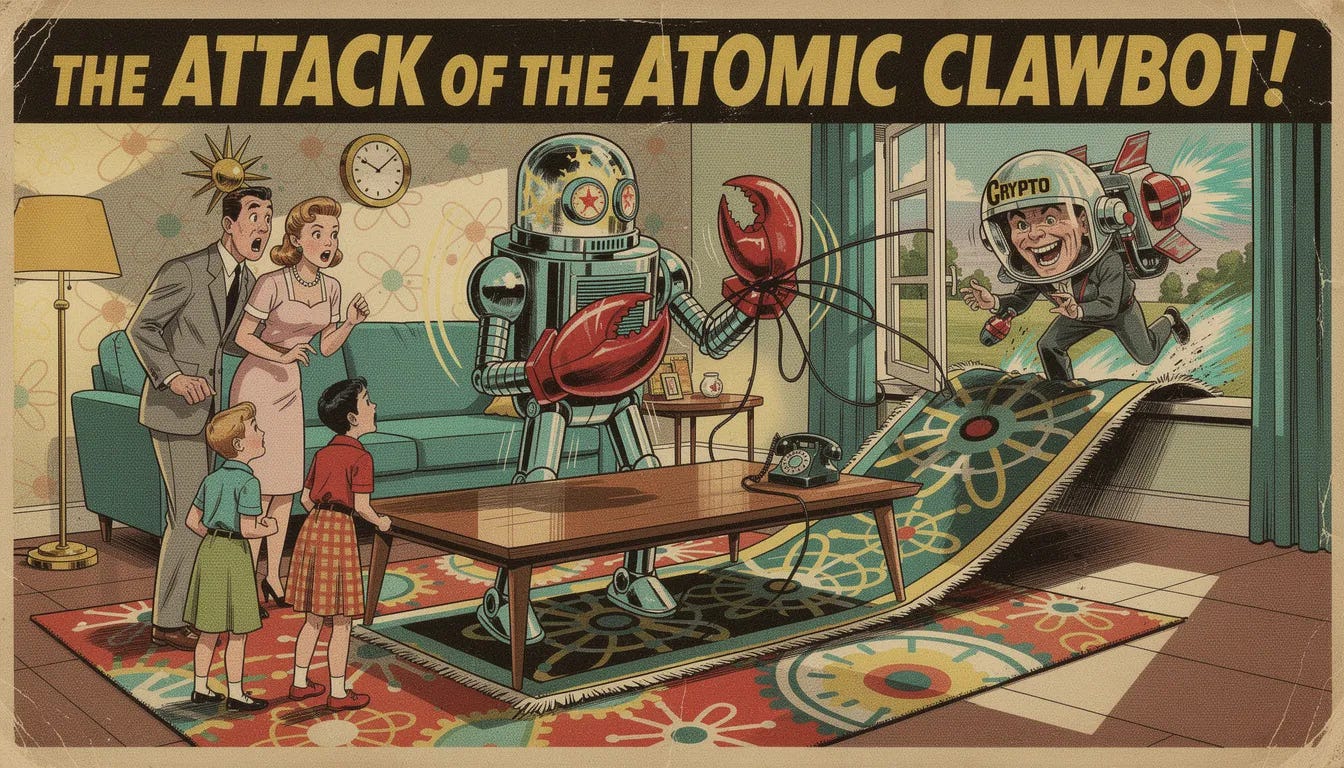
The most chaotic story in tech right now involves a lobster, a cease-and-desist, and a multi-million dollar rug pull. Moltbot (formerly Clawbot) is a viral open-source agentic system that allows an AI to control your computer 24/7, executing commands directly from messaging apps like WhatsApp or Telegram.
Unlike a standard chatbot, Moltbot is designed to “grind” while you sleep, automating complex desktop tasks like coding or trading without supervision.
The project’s explosion in popularity triggered a trademark dispute with Anthropic, forcing a hasty rebrand that went spectacularly wrong: crypto scammers hijacked the old “Clawbot” social handles during the transition, launching a fake crypto token that briefly hit a $16 million market cap before crashing. Amidst the financial carnage, security researchers discovered that thousands of these bots were being installed with zero authentication, effectively leaving users’ private files wide open to the internet.
Why it Matters
This single episode exposes the terrifying trade-off at the heart of the “agentic” future. Users are so desperate for AI that actually does work (rather than just generating text) that they are willing to grant experimental software “god mode” access to their personal operating systems.
It reveals a massive security blind spot in the industry; running an always-on AI that reads your messages and controls your mouse is the digital equivalent of leaving your front door unlocked. Furthermore, the speed of the crypto hijack—executing a financial heist in the split seconds between a name change illustrates that open-source developers are now operating in a predatory environment where reputation can be weaponised and monetised instantly by bad actors.
The 50% Lie: Half the Workforce Has Never Touched AI
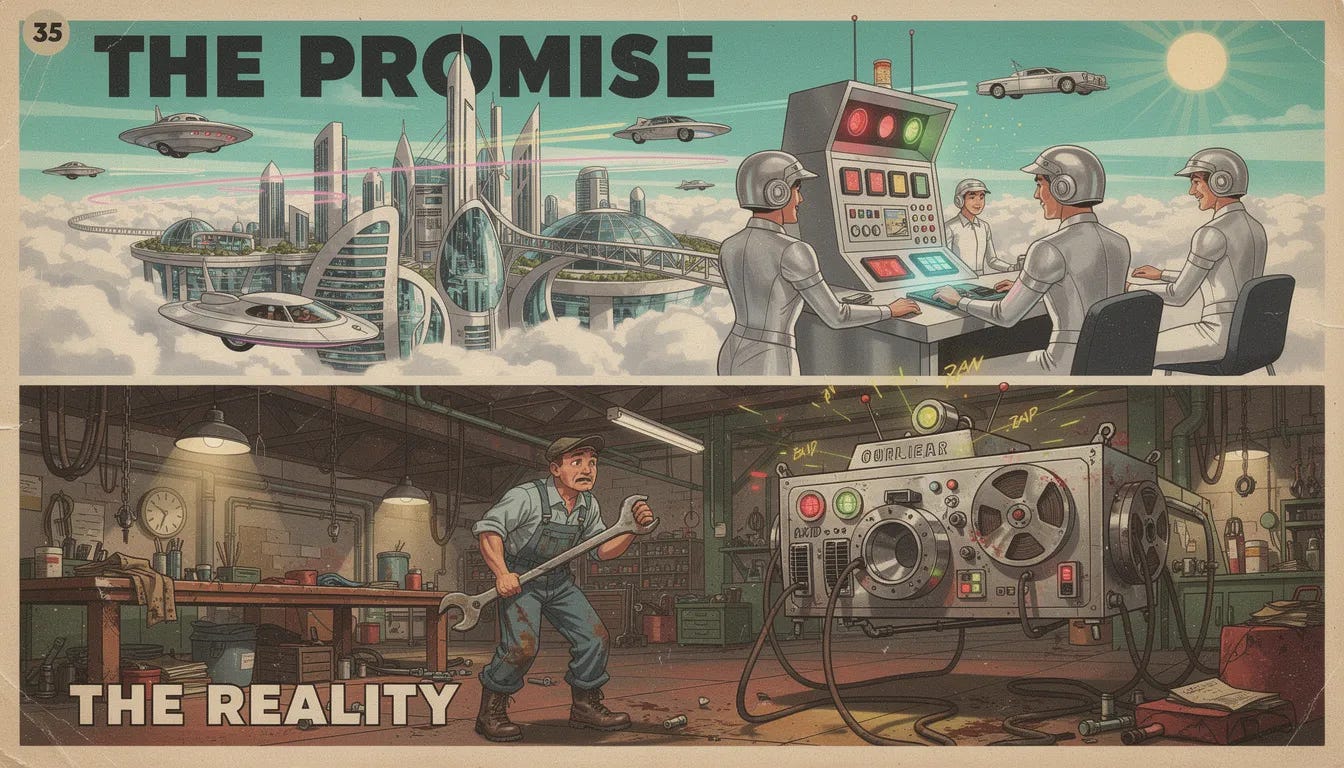
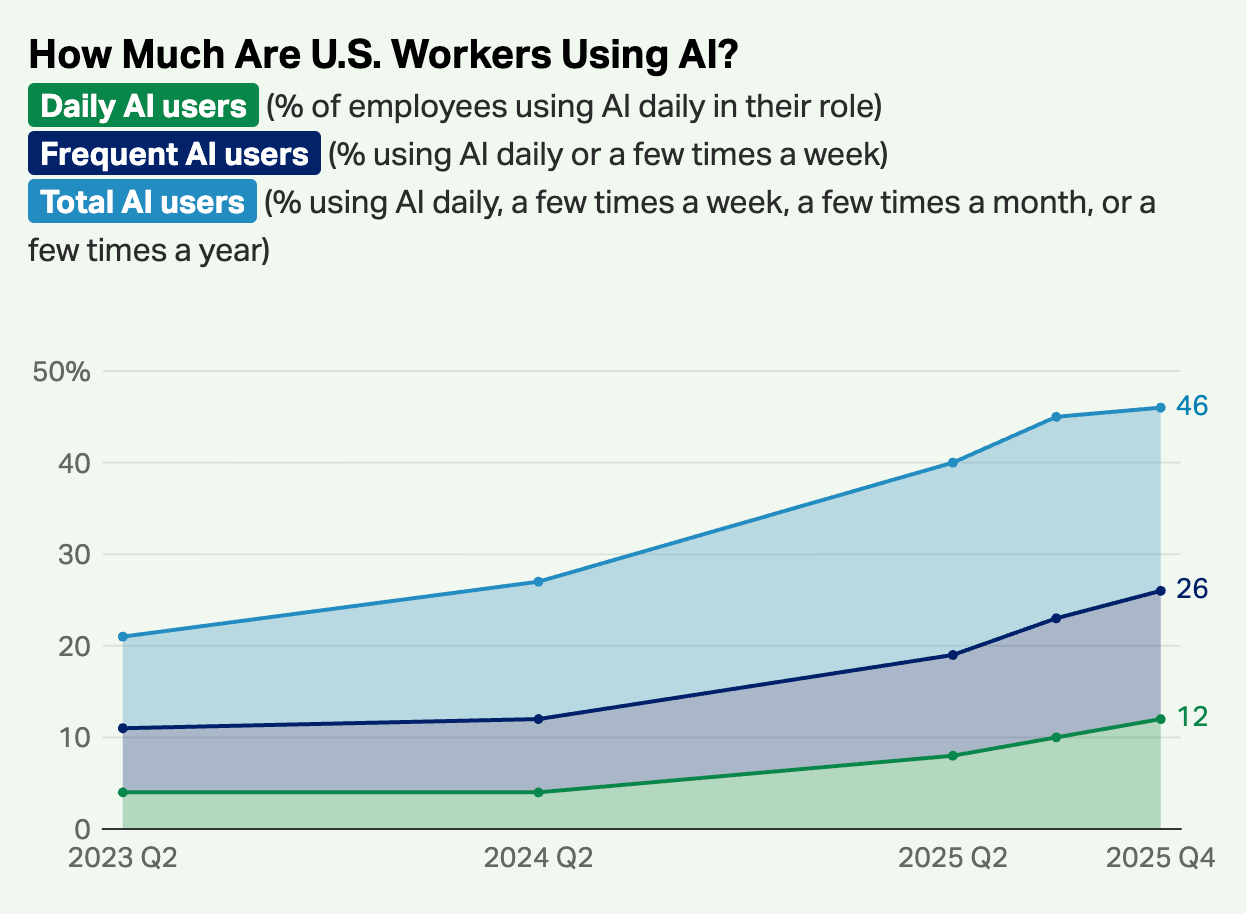
The AI revolution has hit a hard reality check. The latest data from Gallup’s Q4 2024 report reveals that 50% of the US workforce has never used an artificial intelligence tool, not even once. Despite the deafening hype cycle, adoption has officially plateaued, remaining stubbornly trapped within a bubble of remote workers and the technology sector. The figures indicate that for the vast majority of the labour market, specifically those in on-site, physical, or operational roles - the integration of generative AI into daily workflows is currently non-existent.
Why it Matters
This bursts the “exponential adoption” bubble. The data proves we have hit the saturation point of early adopters, exposing a massive “utility gap” where current models simply fail to solve problems for non-digital workers. While LLMs are transformative for writing code or drafting emails, they remain largely irrelevant to a nurse, a plumber, or a construction manager. It suggests that the next phase of growth cannot rely on better chatbots, but requires “vertical AI” deeply embedded into specific industrial tools; until then, the “productivity miracle” will remain an exclusive benefit for the laptop class.
Apple Wants to Watch Your Life, Not Just Read About It

Apple is reportedly preparing to cannibalise the iPhone. Leaks suggest Cupertino is developing a wearable AI camera pin slated for a 2027 release, timed to coincide with a massive generative AI overhaul of Siri and iOS 27. Unlike early failures in the category, this device is designed to act as a “passive observer,” ingesting real-time video and audio to provide contextual assistance without the user ever touching a screen.
Why it Matters
This represents the “Sherlocking” of the entire AI hardware startup sector. By waiting until 2027, Apple is effectively letting players like Humane and Rabbit fail in public so it can refine the form factor. The real strategic value here isn’t the hardware, but the context window: by giving Siri “eyes,” Apple unlocks the ultimate proprietary dataset, your daily physical reality. This creates a moat that LLMs trapped in data centres cannot cross, ensuring that even if GPT-5 is smarter, Siri remains more useful because it actually knows where you left your keys.
Google’s DeepMind Hires an Economist to Model the End of Work
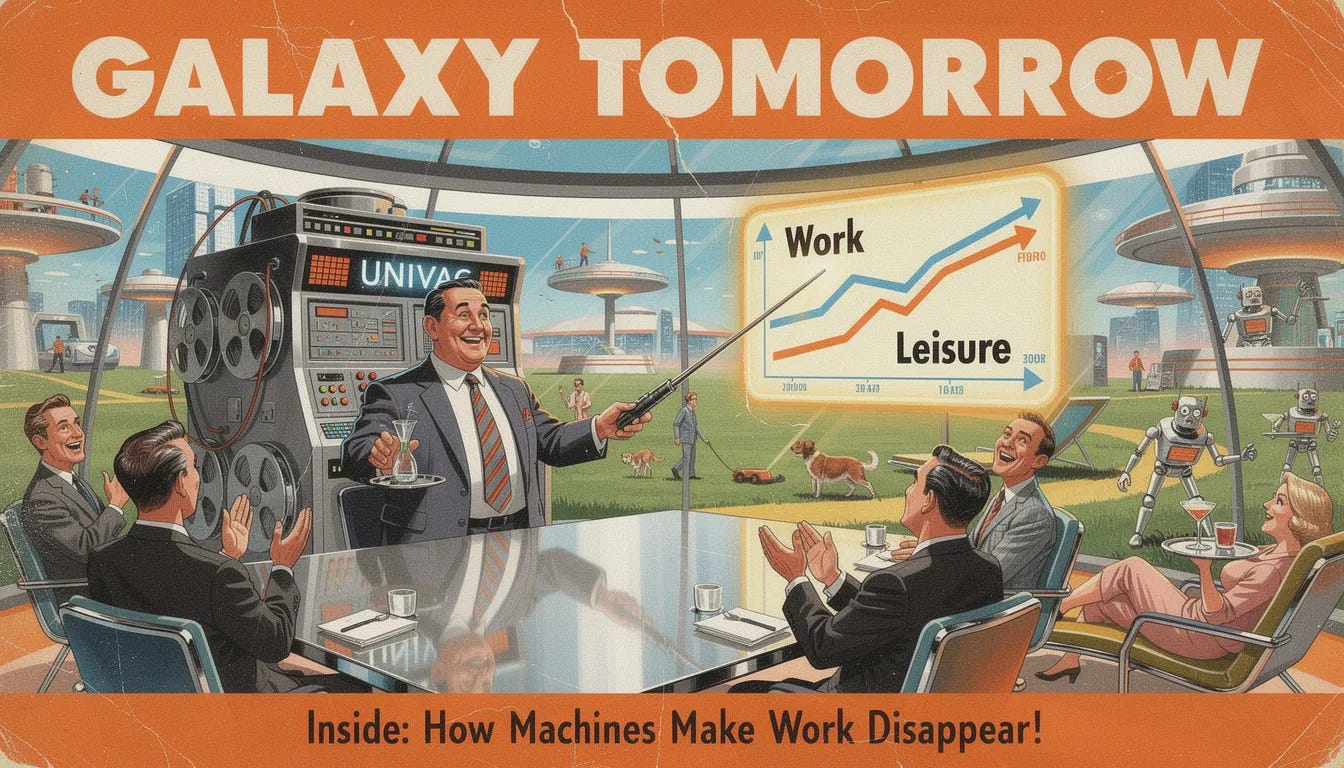
DeepMind has stopped pretending that AGI is just a research project. By appointing co-founder Shane Legg as the world’s first Chief AGI Economist, the lab is formalising the study of its technology’s blast radius. The new role is designed to model the specific breaking points of the global economy - labour displacement, wealth concentration, and productivity shocks, before the algorithms are actually released. Legg will lead internal research to quantify exactly how autonomous systems will dismantle traditional employment structures, effectively treating the arrival of human-level AI as a measurable fiscal event rather than a theoretical possibility.
Why it Matters
This acts as a tacit admission that the “post-labour” economy is a tangible roadmap item rather than science fiction. By moving a co-founder into this seat, DeepMind is signalling that the primary risk to their business is no longer technical failure, but the potential for massive regulatory backlash from the economic destabilisation they intend to cause. It suggests the company is preparing to negotiate the terms of a new social contract directly with governments, positioning itself not just as a software vendor, but as an architect of global fiscal policy.
The Sovereign Stack: China Breaks the Blockade with a 1-Trillion Parameter Beast

The containment wall around frontier AI has arguably collapsed. Moonshot AI has released Kimi k2.5, a massive one-trillion parameter open-source model that rivals GPT-5.2, just as Huawei begins mass deployment of its indigenous Ascend 910C chip. This synchronised launch marks a critical threshold: China has successfully forged a fully independent “sovereign stack”, pairing domestic silicon with domestic algorithms that relies on zero US technology. Built on a sophisticated Mixture-of-Experts (MoE) architecture, Kimi k2.5 is specifically engineered to power agentic swarms, handing developers a free, enterprise-grade reasoning engine that runs entirely on local, sanction-proof hardware.
Why it Matters
This suggests that US export controls have failed to halt China’s advance and may have inadvertently accelerated it by forcing the creation of a decoupled supply chain. The strategic threat to the US is no longer just technological, but physical; while Silicon Valley is struggling to find enough electricity to power its data centres (forcing companies like Meta into nuclear deals), China’s superior grid capacity and energy infrastructure mean it faces far fewer restrictions on scaling. With the hardware bottleneck resolved by Huawei and the energy ceiling lifted by the state grid, the long-term trajectory for model training in China now faces fewer physical constraints than in the West.
Last week’s newsletter:
