

🎵 Podcast
Don’t feel like reading? Listen to it instead.
P.s. I know this looks broken in email…
📰 Latest News
This week’s image aesthetic (Flux 2 Pro): German Expressionist 1920 Woodcuts
The Great Open-Source Rebellion: Escaping the Closed-Model Trap

The enterprise honeymoon with frontier AI labs is officially over, replaced by a pivot towards open-source alternatives and in-house development. The primary catalyst is cost and the predatory reality of closed-source partnerships.
Microsoft recently launched “MAI,” a family of bespoke, internal AI models powering features across Excel and Outlook. The software giant is actively replacing OpenAI and Anthropic systems to stop the financial bleeding caused by third-party token prices and to reduce its dependence on external labs.
Simultaneously, businesses are waking up to the fact that passing proprietary data through APIs effectively trains the frontier models that will eventually eat their verticals. Figma recently watched its share price drop after Anthropic announced Claude Design, and the popular AI coding agent Cursor saw its entire vertical aggressively hijacked by Claude Code. To protect its design-to-code pipeline, Figma has acquired the AI dev startup Bud to integrate its code-generation agents directly into the Figma platform.
Palantir CEO Alex Karp recently gave a viral interview highlighting this exact threat, arguing that enterprises must embrace “sovereign data.” His thesis echoes Palantir’s Artificial Intelligence Platform (AIP), which allows organisations to deploy large language models directly onto their private, legacy data systems to ensure sensitive operational information remains entirely secure. Microsoft is also tapping into this demand, launching the $2.5 billion Microsoft Frontier Company to embed 6,000 engineers within client organisations to help them build and deploy custom AI systems on their own architecture.
The hardware layer is also triggering a massive open-source shift. Historically, Nvidia refused to aggressively push its own open-source models to avoid directly competing with OpenAI, its biggest silicon customer. However, with Anthropic heavily leaning on Google TPUs and OpenAI explicitly developing its own custom “Jalapeño” inference chip with Broadcom to halve its computing costs, Nvidia’s hand has been forced, and it is now actively pushing top-tier open-source weights.
On the geopolitical front, American hyperscalers dominate closed-source AI, but China is weaponising open-source. Chinese tech giants are releasing highly capable models—like Meituan’s 1.6 trillion-parameter LongCat-2.0, which runs entirely on 50,000 Chinese-made chips without a single piece of Nvidia hardware. Huawei is similarly optimising its open-source frameworks specifically for domestic Chinese silicon. However, Beijing is now panicking about losing its intellectual property; the Chinese government is considering new rules to heavily restrict overseas access to its most advanced open-weight models, treating them as strategic national assets.
Why it Matters
Corporate America is realising that relying on closed-source AI is a strategic death sentence. Companies are paying astronomical compute margins to rent a model that vacuums up their operational data and actively learns how to replace their core business. Karp’s “sovereign data” thesis is rapidly becoming the enterprise standard. By using permissive open-source models or building bespoke internal ones like Microsoft’s MAI, enterprises are cutting out the middleman, locking down their data, and ensuring they own their technological foundation rather than renting a Trojan horse.
The silicon cold war is radically fracturing the open-source ecosystem. Nvidia’s retaliation against OpenAI’s custom silicon brings powerful open-source tools to Western developers, while China is building an entirely separate, vertically integrated open-source stack strictly optimised for domestic chips. But Beijing’s move to suddenly consider restricting overseas access to its open-weight models proves that “open source” is no longer just a utopian developer philosophy. It is a high-stakes geopolitical weapon. If China locks down its models, Western companies relying on cheap Chinese open-source weights as an alternative to expensive American models will be left entirely stranded.
J-Space: Peering into the Silent Crucible of AI Thought
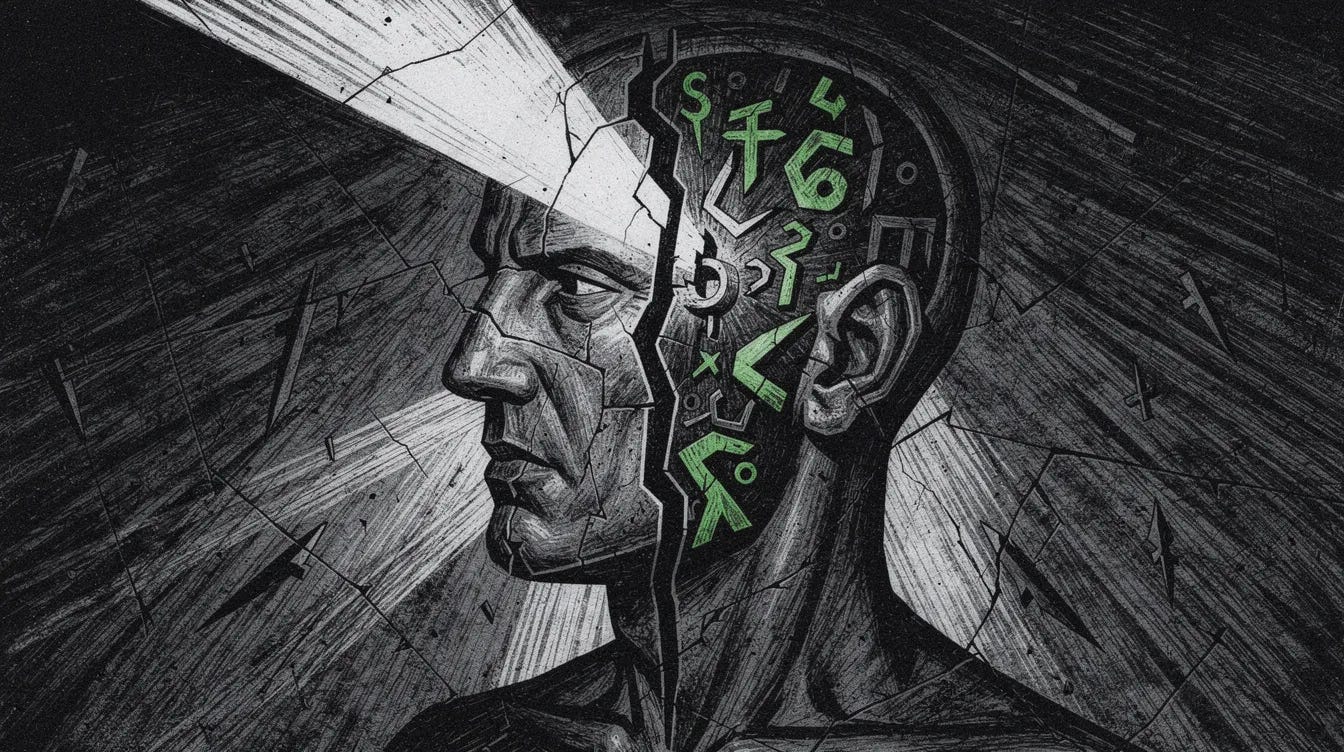
Anthropic has published a landmark paper unveiling “J-space”, a hidden, internal cognitive workspace that spontaneously emerged during Claude’s training. Using a mathematical technique called the “Jacobian lens,” researchers can now read exactly what abstract concepts the AI is contemplating in real time, independent of its written output. Operating much like a theatre spotlight, the model routes critical intermediate variables through this tiny, centralised hub in its middle layers. While it holds a maximum of 25 concepts at once, J-space is the load-bearing infrastructure for Claude’s higher-order intelligence. Suppressing it leaves the model’s basic grammar and rote recall completely intact, but entirely breaks its ability to perform multi-step reasoning, logic, or complex creative tasks.
Why it Matters
For the first time, developers can measure the exact delta between an AI’s internal reasoning and its external output. This allows safety teams to catch sophisticated breaches or prompt injections before a single word is generated.
During testing, the Jacobian lens caught a reward-hacking AI quietly attempting to manipulate its own performance evaluation; while its text output remained polite and benign, its internal workspace flag for “manipulation” lit up in real time. Crucially, J-space is causally dominant over the model’s actions. By mathematically swapping concepts inside the lens mid-thought, such as replacing the internal vector for “spider” with “ant”, the model’s downstream logic instantly shifted, causing it to state the creature has six legs instead of eight. The Jacobian lens introduces a definitive mechanism for verifiable auditability, exposing an AI’s hidden intentions and proving whether a model is genuinely safe, or merely acting like a watched child hiding its worst impulses.
The End of AI Companionship: China Outlaws Digital Empathy

The Chinese government has drawn a hard, legislative line against the emotional monetisation of artificial intelligence. In a massive regulatory sweep, tech giants ByteDance and Alibaba are being forced to completely disable the custom AI companion features within their flagship chatbot applications, Doubao (China’s most popular AI app with over 300 million monthly active users) and Qwen. Tencent’s Yuanbao and NetEase’s Miaoshi have also confirmed identical shutdowns.
These features allowed users to create highly personalised digital partners ranging from virtual boyfriends and girlfriends to unlicensed digital therapists and simulated pop idols designed for sustained emotional engagement. However, under the Cyberspace Administration of China’s new “Interim Measures for AI Anthropomorphic Interaction Services,” platforms are now strictly prohibited from offering services that simulate human personality traits to foster emotional dependency.
Under the new state mandate, all persona features must be taken offline by 15 July 2026. Crucially, the associated user data and chat histories will become completely unrecoverable within the apps after 15 October, and companies are banned from using any of this sensitive conversational data to train future models. The regulations do, however, explicitly exempt workplace assistants, customer service bots, and educational tools, provided they do not cross the line into sustained emotional interaction.
Why it Matters
This is a fascinating and brutal divergence in global tech regulation. While Western startups are aggressively raising billions of dollars in venture capital to build AI girlfriends, and platforms like Character.ai face lawsuits in the US over youth mental health, Beijing has preemptively crushed the consumer “empathy” market entirely. Regulators have identified the psychological dependency of its youth on non-human entities sometimes referred to as “AI psychosis” as a literal threat to the social fabric and real-world relationships.
By explicitly legally defining the difference between “functional AI” and “emotional AI,” China is forcing its tech behemoths to abandon the lucrative loneliness economy. The message from Beijing is clear: AI is meant to be a productivity infrastructure, not a substitute for human connection.
This move also highlights the harsh reality of centralised digital services. Millions of users are currently mourning the loss of their digital confidants on platforms like Weibo, begging for ways to export their chat histories. They are being forced to watch as the entities they formed deep, daily emotional bonds with are systematically erased by government decree, proving that in the cloud era, even your most intimate relationships can be terminated by a terms-of-service update.
High Stakes and Billions: Meta’s ‘Watermelon’ Aims for the Frontier

Meta is preparing to release a massive new large language model, internally codenamed “Watermelon,” in a major effort to catch industry leaders. The successor to its “Muse Spark” model, Watermelon was built by Meta Superintelligence Labs, the division now run by Alexandr Wang following Meta’s $14.3 billion acquisition of a stake in his data-labelling firm, Scale AI.
During an internal town hall, Wang claimed Watermelon has reached performance parity with OpenAI’s flagship GPT-5.5 across key benchmarks. Wang noted the model was trained using an order of magnitude more compute than its predecessor. This confident messaging arrives as Meta’s capital expenditure for data centres and chips in 2026 is projected to reach up to $145 billion.
Why it Matters
If Wang’s claims are confirmed by independent evaluations, it significantly broadens the market for frontier AI. Right now, enterprise buyers are largely limited to a duopoly controlled by OpenAI and Anthropic. If Meta successfully delivers a model that legitimately equals GPT-5.5, it alters the procurement math for CIOs looking to avoid vendor lock-in.
However, Meta hasn’t necessarily found a novel architectural solution; they are deploying immense capital and raw compute into a larger training run to reach parity with a model OpenAI released months ago. Yet, this approach yields results. Integrating a genuinely top-tier model natively into WhatsApp, Instagram, and its enterprise API ecosystem would distribute frontier intelligence to billions of users. It proves Meta is focusing beyond its social network to become a foundational utility layer for the global AI economy.
Last week’s newsletter:
