

🎵 Podcast
Don’t feel like reading? Listen to it instead.
📰 Latest News
This week’s image aesthetic (Flux 2 Pro): Psychedelic Blotter Art
Anthropic’s "Claude Design" Just Tanked Figma's Stock by 7.5%
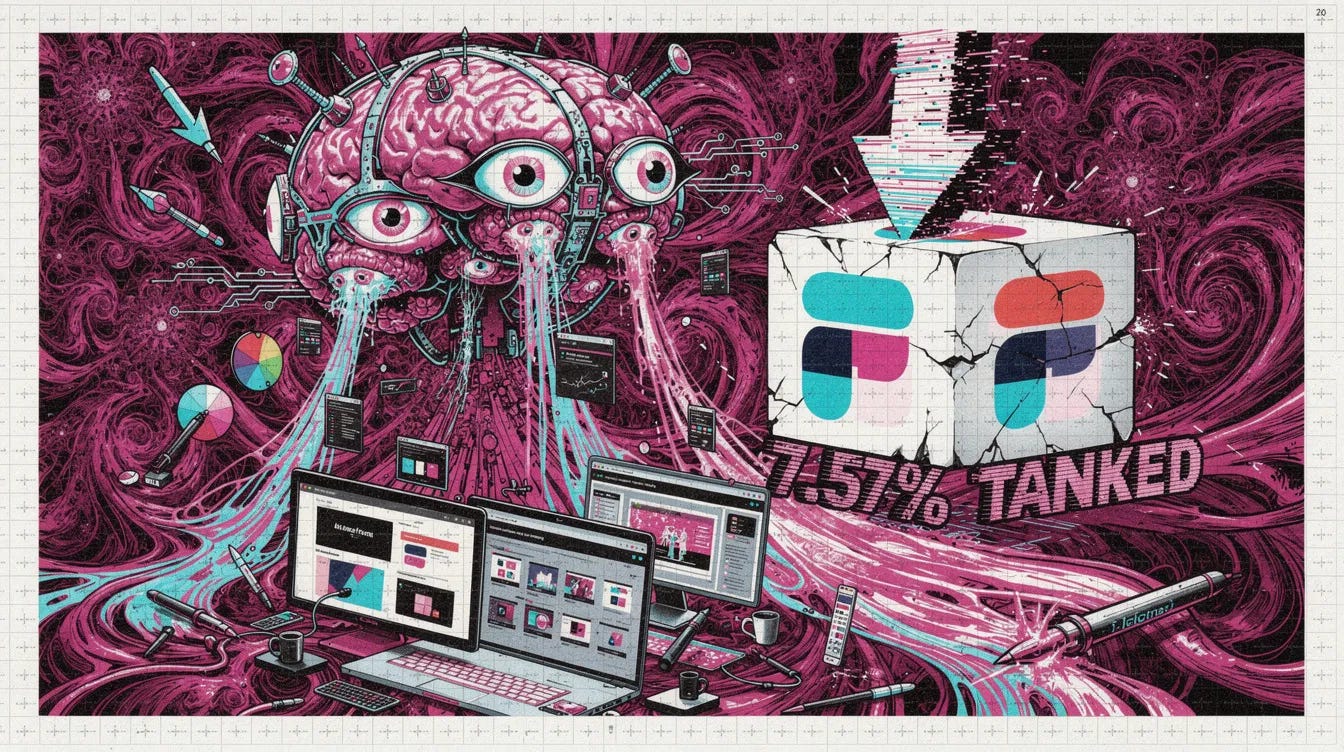
Anthropic just dropped Claude Design, a new AI-powered visual workspace that transforms plain language descriptions into fully editable interactive prototypes, slide decks, and product mockups. Powered by the newly released Claude Opus 4.7 vision model, which boasts a massive upgrade to handle high-resolution images up to 3.75 megapixels, the tool lets users generate production-ready visual work without ever opening traditional design software. Users simply describe what they want, and the AI builds a first draft that can be seamlessly refined through chat, direct edits, or custom sliders generated on the fly. Crucially, the tool can automatically ingest a company's existing codebase, live website, or design files to instantly learn and apply a custom, on-brand design system. Available now as a research preview for Pro, Max, Team, and Enterprise subscribers, Claude Design allows finished work to be exported as PDFs, PowerPoint files, or sent directly to Canva, while offering a one-click handoff to Claude Code for instant development.
Why it Matters
This launch is a direct, aggressive strike at the core business models of established design giants like Figma and Adobe. Claude Design is deliberately built to bypass trained designers entirely, giving founders, product managers, and marketers the immediate power to generate complex, functional visuals from an initial idea in minutes. The market instantly recognized the threat, sending Figma shares plummeting 7.5% on the news, a blow compounded by the fact that Anthropic's Chief Product Officer resigned from Figma's board just three days prior to the launch. By merging the brainstorming phase, the visual design process, and the final coding handoff into a single AI conversation, Anthropic is actively attempting to reinvent how software and creative assets are built from the ground up.
Train Your Own Replacement: Meta Forces Employees to Generate Data for AI Agents
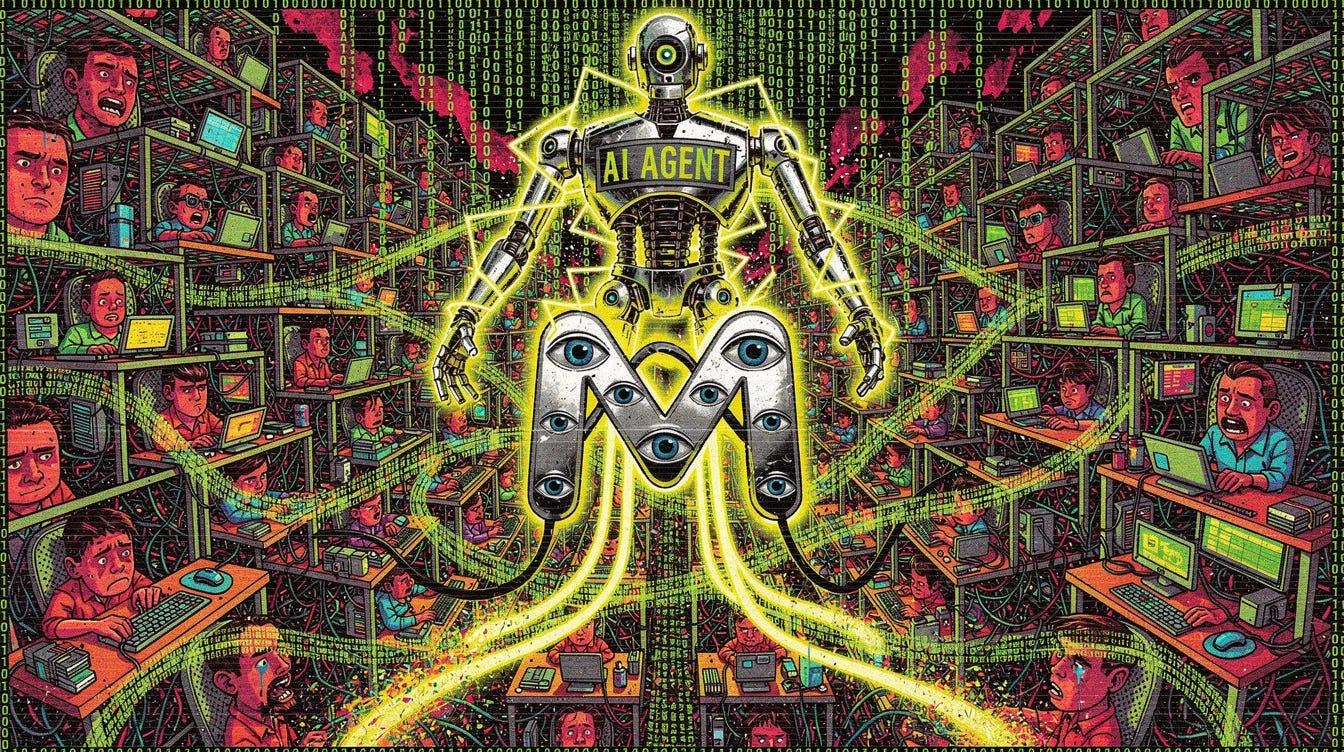
Meta is turning its own workforce into the ultimate training dataset. The social media giant is installing a new tracking software called the “Model Capability Initiative” (MCI) on the work computers of its US-based employees. This program meticulously logs mouse movements, clicks, and keystrokes, and even periodically captures screenshots of their displays as they navigate work applications. The goal is to teach Meta’s artificial intelligence models how to perform routine computer tasks currently handled by humans, such as using keyboard shortcuts or navigating dropdown menus. While Meta has explicitly stated that this granular data will not be used for employee performance reviews, it feeds directly into a broader push to build AI agents that can carry out complex workflows completely autonomously.
Why it Matters
This initiative is part of an accelerating shift in corporate AI development, moving away from relying on public or synthetic data and directly harvesting detailed human interaction data. However, it brings workplace surveillance and data privacy into sharp focus, creating a new challenge for corporate data governance. With no option for employees to opt out, the mandatory program has triggered severe internal backlash. It raises profound questions about consent and trust, exposing a grim irony: Meta employees are being forced to generate the exact data needed to automate their own jobs. This surveillance unfolds against a highly tense backdrop, as the company is already preparing to lay off roughly 10% of its global workforce starting in May.
The AI Layoffs Are Here: Snap Inc. Cuts 16% of Its Workforce to Fund the AI Pivot
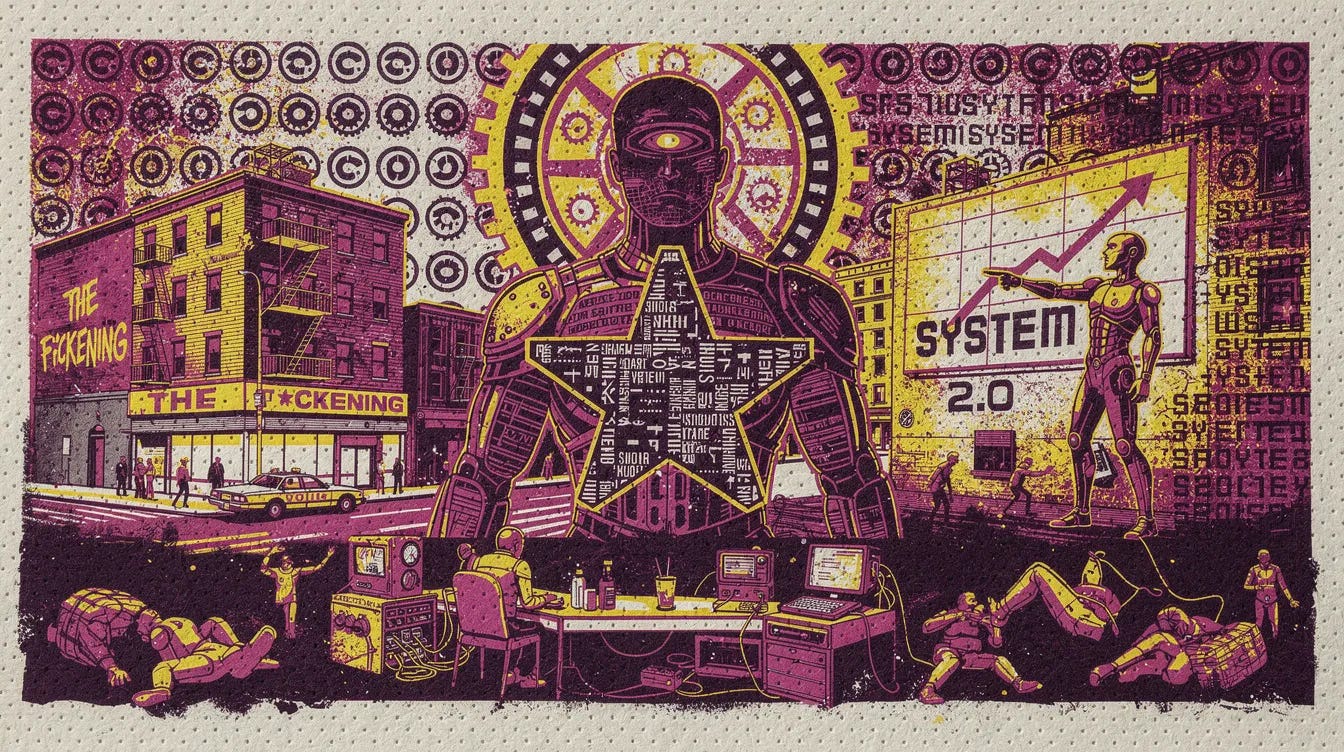
Snap Inc., the parent company of Snapchat, has just announced a massive round of job cuts, eliminating roughly 1,000 employees, which equates to 16% of its full-time global workforce. In a stark internal memo to staff, CEO Evan Spiegel explicitly cited rapid advancements in artificial intelligence as the primary driver for the restructuring. He noted that AI tools are fundamentally changing how teams operate, allowing “small squads” to drastically reduce repetitive work, increase velocity, and accomplish significantly more with fewer people. Alongside the layoffs, Snap is shutting down over 300 open roles, all in a bid to reduce the company’s annualised cost base by over $500 million by the second half of 2026 and carve a clear path towards net-income profitability.
Why it Matters
This brutal workforce reduction at Snap illustrates a much wider, deeply concerning trend sweeping through the technology sector. The explicit link made by Spiegel between the layoffs and AI-driven efficiency signifies a monumental strategic shift in corporate restructuring. Tech companies are no longer just theorising about AI’s potential; they are actively translating its capacity for task automation into tangible, permanent changes to their workforce size. Investors are already rewarding this ruthless pivot, as Snap’s stock jumped over 6% following the announcement. With activist investors increasingly pressuring firms to replace human roles with AI, this move is highly likely to influence other corporations to aggressively adopt the technology, flatten their organisational hierarchies, and cut operational costs at the direct expense of human employees.
A Fake Artist Just Hit #1 on iTunes and the Music Industry is Panicking
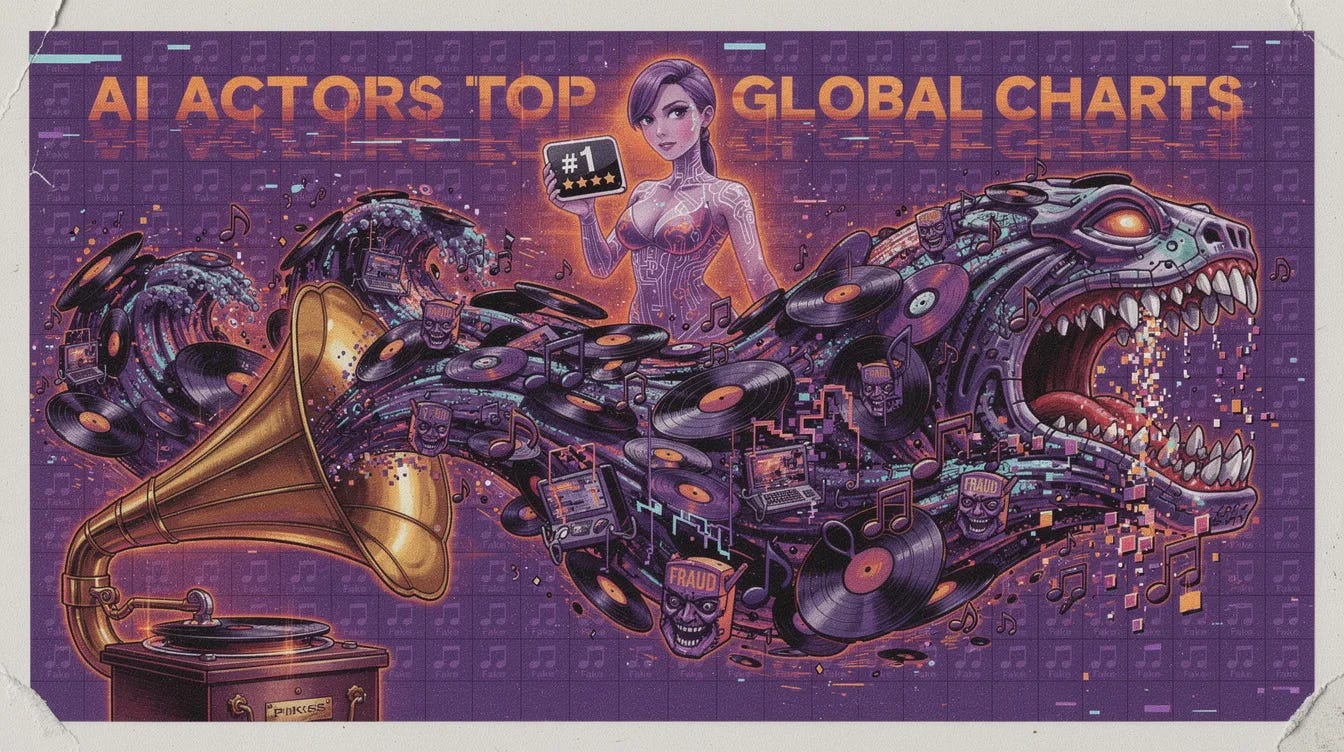
The floodgates of synthetic music have officially burst open. The global streaming platform Deezer is now receiving a staggering 75,000 fully AI-generated tracks every single day. This means artificial intelligence now accounts for 44% of all new uploads. In response to this 650% explosion in synthetic content, Deezer has deployed proprietary tools to identify over 13.4 million AI tracks, actively excluding them from algorithmic recommendations and editorial playlists. But while streaming platforms fight the deluge of spam, AI music just achieved a massive commercial milestone. “Celebrate Me,” a single by virtual artist persona Inga Rose, reached number one on the iTunes global sales charts in April 2026. Featuring music generated by the AI platform Suno and human-written lyrics, the track proves that synthetic acts can now dominate mainstream charts.
Why it Matters
The music industry is now fighting a two-front war against artificial intelligence: massive royalty fraud and legitimate commercial disruption. On one hand, the staggering volume of synthetic uploads exposes a severe threat to the streaming economy. Bad actors are weaponising cheap generative tools to manipulate payouts and siphon money away from human artists. With Deezer finding that 85% of AI streams are driven by fraudulent bot activity, the platform is aggressively demonetising these tracks to prevent the total dilution of the royalty pool.
On the other hand, the massive sales success of “Celebrate Me” proves that AI music is no longer just background noise. By successfully competing for direct consumer purchases alongside human artists, AI-assisted tracks are moving from an experimental phase into a commercially viable reality. This dual threat forces a complete reckoning for the industry. Tech platforms must urgently deploy aggressive fraud controls to protect human creators, while the industry simultaneously adapts to a new world where a totally synthetic persona can legitimately top the global charts.
GPT-5.4 Pro Just Solved a 60-Year Math Mystery That Defeated Human Experts
A 60-year-old mathematical mystery has just been cracked, not by a human, but by artificial intelligence. In a landmark discovery, OpenAI’s GPT-5.4 Pro model has successfully solved a long-standing conjecture related to primitive sets originally posed by the legendary mathematician Paul Erdős. The AI did not merely recognise existing patterns; it discovered an entirely novel reasoning path that human mathematicians had overlooked for decades, even writing up its solution as a formal research paper. This breakthrough heralds a massive shift towards AI-driven discovery, a push supported by OpenAI’s latest suite of highly specialised reasoning models. In the life sciences, the newly launched GPT-Rosalind is actively discovering hidden connections within vast genomic and chemical datasets. Available as a research preview to eligible enterprise customers, it synthesises evidence to generate novel hypotheses and plan complex biological experiments.
Why it Matters
These discoveries prove that artificial intelligence has fundamentally evolved from a predictive text engine into an autonomous researcher capable of generating original solutions to complex, long-standing scientific problems. By finding a mathematical proof that eluded experts for over half a century, GPT-5.4 Pro demonstrates how AI can bypass human cognitive biases and open up entirely new lines of enquiry. This capacity for discovery is poised to drastically alter research methodologies and accelerate other notoriously slow-moving fields. In biology, GPT-Rosalind’s ability to instantly synthesise data across over 50 scientific tools could shorten the initial, decade-long phases of drug discovery. By helping researchers identify complex connections in vast datasets and formulate stronger hypotheses, it paves the way for the faster and more cost-effective development of life-saving medicines.
🔗 More from Scientific American
Last week’s newsletter:
